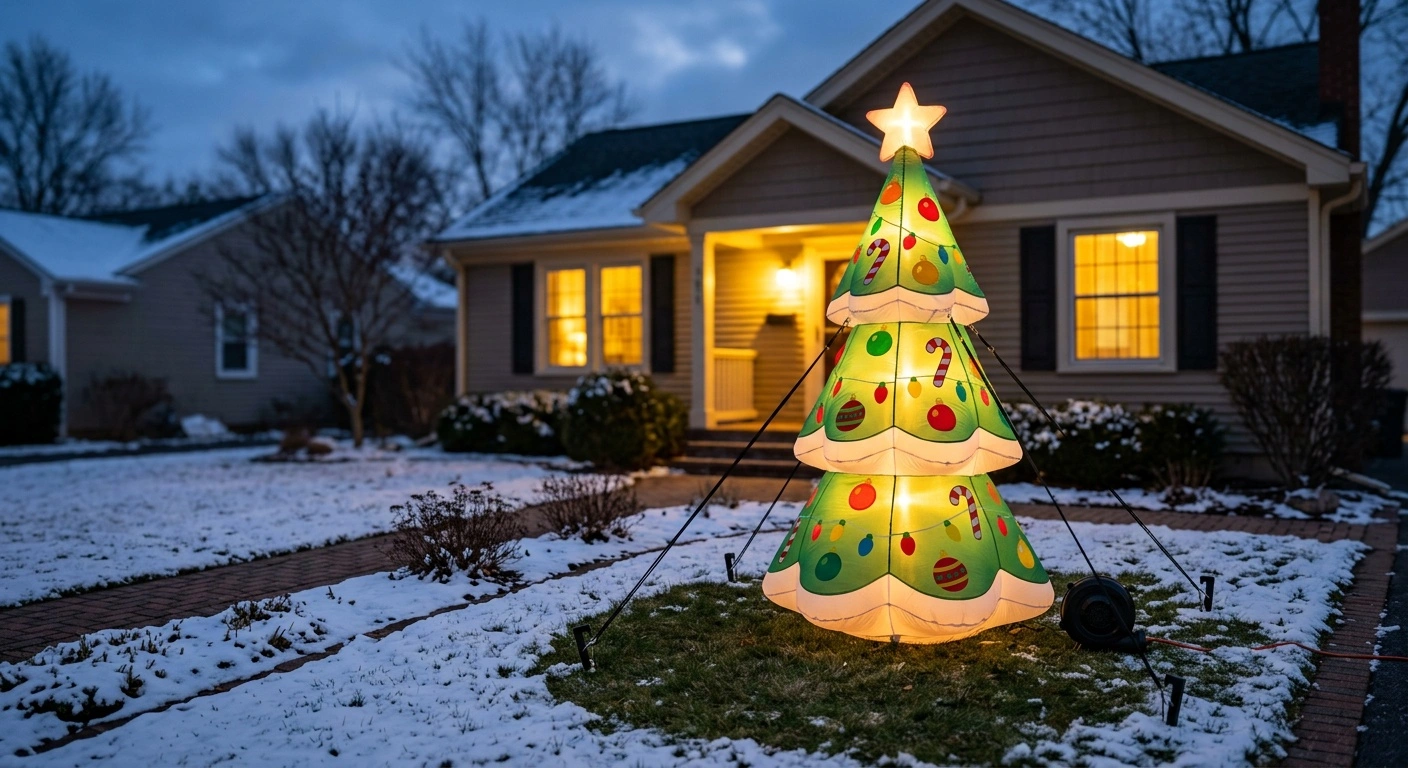
An inflatable Christmas tree adds height and visibility to a holiday display without requiring a ladder or roofline lights. Most models take only a few minutes to set up. Spread the fabric, connect the blower, secure the stakes and tethers, then plug it into a suitable outdoor outlet.
Reliable models use a strong blower, balanced internal lighting, reinforced tie-down points, and enough anchors for their height. Poorly designed trees may lean in light wind, glow unevenly, or snag on shrubs and rough ground.
Do not choose by height alone. A tall tree can become difficult to manage if it has a narrow base or weak tether placement. Your yard also needs enough open space for the guy lines. The recommendations below focus on practical configurations because models and retailer stock often change each season.
What to Look for in an Inflatable Christmas Tree
Start with the full installed dimensions rather than the advertised height. A wide, layered tree needs clear ground around its base. A slim cone design fits more easily beside a porch or in a small front yard.
Check the package contents before buying. The listing should include a continuous-duty blower, internal lights, ground stakes, and several tether lines. Never assume that every required accessory comes in the box.
For outdoor displays, check every electrical component for an outdoor-use label. That includes the blower, power supply, timer, and extension cord. Look for certification from a recognized testing laboratory, such as UL or ETL. Choose another product if the listing gives vague electrical or outdoor-use information.
Connect the display to a GFCI-protected outlet. A GFCI cuts power when it detects potentially dangerous current leakage. This protection remains important even on a covered porch.
Fabric quality matters because the shell must hold enough air to maintain the tree’s shape. Look for polyester or nylon fabric, reinforced seams, and sturdy attachment loops. Pay extra attention to trees with projecting stars, candy canes, ornaments, or characters.
Small stitched openings may be part of the design. However, torn seams, loose loops, and unusually thin fabric indicate poor construction. Inspect those areas before setting up the tree outside.
Good lighting spreads through the entire body instead of collecting near the base. Internal LEDs usually draw little power and generate less heat than older incandescent bulbs. However, some manufacturers make built-in lights difficult to replace.
Dark studio photos can exaggerate brightness. Many inflatables look better from the street after dusk than under a bright porch light. Customer photos often provide a more realistic view of the lighting.
Finally, consider blower noise and placement. A quiet fan hum is normal, but it may become distracting beside a bedroom window or seating area. Keep the intake clear and above standing water. Snow, leaves, mulch, and loose fabric can restrict airflow.
Recommended Tree Configurations at a Glance
These recommendations focus on configurations that suit common home settings. Colors and decorative details vary among sellers, but the same buying principles apply each season. For most lawns, a medium classic tree offers the best balance of visibility, stability, and storage size.
Compact trees fit porches and small planting beds. Taller models require more open ground and stronger tether placement. Character scenes appeal to families, but their projecting parts may catch wind or inflate unevenly.
Before ordering, compare the complete dimensions, anchoring hardware, electrical certification, warranty, and outdoor-use instructions. Also check the return policy and current stock. Product photos can make a decoration appear larger than its actual measurements.
| Best use | Recommended configuration | Typical price tier | Main advantage | Main drawback |
|---|---|---|---|---|
| Best overall | Medium classic tree with ornaments and a star | Midrange | Easy to place and visible from the street | The common design may feel less distinctive |
| Small yard or porch | Compact tree around railing height | Budget to midrange | Needs less ground and storage space | May look small beside a large house |
| Large front lawn | Tall tree with a broad, stable base | Upper midrange to premium | Strong street presence | Catches more wind |
| Families with children | Tree scene with Santa, snowmen, or woodland figures | Midrange to premium | Provides details for close viewing | Complex sections may inflate unevenly |
| Traditional display | Red, green, and gold ornamented tree | Midrange | Coordinates with common holiday lights | Printed details may look flat in daylight |
| Budget display | Simple cone tree with internal LEDs | Budget | Quick setup and compact storage | Usually has fewer details and tie-down points |
| Sheltered porch | Slim vertical tree or stacked ornament design | Budget to midrange | Fits a narrow footprint | Performs poorly on an exposed lawn |
Best Overall: Medium Classic Ornament Tree
A medium-height tree with a broad base suits the average front yard. A star topper, large ornaments, and internal LEDs create a clear outline from the street. This size also avoids the wide guy-line spread that oversized inflatables often require.
The familiar shape works well with roofline lights, porch garland, and pathway markers. It can anchor the main display or fill an open area beside the porch. Its moderate size also makes off-season storage easier.
Look for three or four anchoring directions, reinforced lower loops, and tethers above the tree’s midpoint. These features help the tree resist twisting in changing wind. Printed ornaments often look better from a distance, while sewn accents add depth during daylight.
Best for a Small Yard: Compact Inflatable Tree
A compact model fits a narrow lawn, shallow planting bed, or sheltered porch. Its lower profile exposes less fabric to wind. Shorter tether lines also fit more easily without crossing a walkway.
Choose a clear tree outline and bright, evenly spaced lights. Tiny printed decorations often disappear when viewed from the curb. A simpler pattern usually produces a stronger nighttime display.
Compact models still need secure anchors. Stake the base and use every available tether according to the manufacturer’s instructions. Keep the blower intake away from walls, leaves, snow, and pooled water.
Scale remains the main drawback. A small tree may look undersized against a two-story house, even if listing photos suggest otherwise. Compare its measurements with porch rails, windows, or nearby shrubs before ordering.
Best for a Large Lawn: Tall Tree With a Wide Base
A tall tree works best on an open lawn with staking space on every side. Choose a broad lower section instead of a pencil-thin shape. The wider body gives the blower a more stable form to support.
Simple silhouettes usually read better from the street. Large ornaments and a defined topper remain visible at a distance, while small printed details tend to disappear. Measure the viewing distance before paying for elaborate decoration.
Tall inflatables create the greatest wind load. Confirm that the package includes several upper tethers and durable attachment loops. You may use stronger outdoor stakes if they fit the designated loops without damaging the fabric.
High winds require deflation. Unplug the blower and bring the fabric down before bad weather arrives. Extra ropes cannot make a large fabric structure safe in severe conditions.
Best for Families: Tree With a Holiday Character Scene
A tree surrounded by snowmen, reindeer, penguins, elves, or Santa gives children several details to explore. These scenes work well beside a walkway where visitors can view the smaller figures closely. Their wider shape can also fill an empty section of lawn.
Complex designs need more attention during startup. Arms, antlers, hats, and side figures may remain folded as the main body rises. Gently free trapped sections while keeping your hands away from the blower intake.
Check that each projection has a clear internal air path. Avoid designs that suspend large figures from narrow fabric connections. Those sections place more stress on seams and may sag over time.
Keep cords, blowers, stakes, and tethers away from children. Do not let anyone climb, pull, or sit on the display. Even a low inflatable contains electrical components and taut anchor lines.
Best Traditional Look: Red, Green, and Gold Tree
A red, green, and gold design coordinates with warm white roofline lights, wreaths, and porch garland. Large ornament shapes and broad ribbon patterns remain visible from the sidewalk. A well-defined star also helps the silhouette read clearly at night.
Choose warm or neutral LEDs when the manufacturer provides color-temperature details. Very cool white LEDs can make gold printing look pale or silver. Customer photos may reveal this effect better than edited product images.
Sewn accents create more depth in daylight. Printed decorations keep the body lighter and easier to fold. Metallic-looking prints rarely resemble real metal at close range, so judge them at the display’s normal viewing distance.
Best Budget Option: Simple Cone Tree
A basic cone tree offers a practical lower-cost choice. Its simple body inflates quickly, has fewer pieces to snag, and folds into a small storage bin. The narrow shape also fits between shrubs more easily than a character scene.
Expect a flatter daytime appearance. Printed ornaments carry most of the visual detail, while internal LEDs improve the display after dark. Look for even light placement rather than a large number of decorative features.
Budget packages may include thin plastic stakes. Inspect all hardware before using it in firm soil or an exposed location. Replace weak stakes with suitable outdoor anchors that fit the manufacturer’s tether loops.
Never tie lines to gutters, utility fixtures, door handles, or fragile railings. Use designated loops and suitable ground anchors. Improvised attachment points can damage both the tree and your home.
Best for a Sheltered Porch: Slim Vertical Tree
A slim tree fills an empty porch corner without blocking the door or taking over the steps. Roof and wall coverage may reduce direct exposure to rain and wind. However, an open porch still requires a product approved for outdoor use.
Measure the complete inflated width before ordering. Leave open space around the blower intake and keep fabric away from hot lights or heaters. Also confirm that the collapsed material cannot fall across the doorway.
If you cannot use stakes, follow the manufacturer’s instructions for weighted or approved anchor points. Never run tethers across steps or walking paths. A nearly invisible line can create a serious trip hazard after dark.
How to Check Construction and Lighting
Inspect the tree before placing it outside. Look for cuts, weak seams, loose decorations, and damaged tether loops. Then check the plug and power cord for pinching, fraying, or exposed wiring.
Return any new product with electrical damage. Tape and makeshift splices do not provide a safe repair for outdoor conditions. Contact the manufacturer if damage appears after the retailer’s return window closes.
Test the tree on a clean, dry surface. Give folded sections time to open as the blower fills the body. The main body should become reasonably firm, and the topper should rise without constant assistance.
A soft section may contain a fold that blocks an internal air passage. Gently reposition the fabric and test it again. Repeated collapse may indicate a leak, weak blower, or poor internal design.
View the lights from several angles after dusk or in a dim room. Bright spots over individual LEDs are normal. Large dark areas can make the tree appear partially deflated from the street.
Listen to the blower during the test. A steady hum is expected, but scraping, rattling, and changing speeds suggest a fault. Exchange a noisy new unit instead of waiting for the problem to worsen.
Safe Setup for an Outdoor Inflatable Christmas Tree
Choose level ground away from sharp branches, rough masonry, standing water, heat sources, and vehicle routes. Spread the fabric before starting the blower. Loose material can wrap around the housing and block airflow.
Once the tree rises, stake the base and attach tethers on every side. Keep the lines snug enough to provide support. Excessive tension can distort the shape or strain the seams.
Use outdoor-rated electrical products throughout the setup. Look for UL, ETL, or another recognized laboratory mark on the inflatable, timer, and extension cord. Follow the manufacturer’s limits for cord length and electrical load.
Connect the display to a GFCI-protected outlet. Use weather-resistant connection covers where appropriate, and route cords away from puddles and foot traffic. Position plug connections according to the product instructions.
Do not place plugs inside homemade sealed containers. These enclosures may trap heat or moisture. Use connection covers designed for outdoor electrical cords instead.
Avoid overloading the circuit, and replace damaged cords immediately. Use an outdoor timer to switch off the display while you sleep or leave home. If strong winds approach, unplug and deflate the tree.
Timers, Weather, and Daily Operation
An outdoor timer removes the need to plug in the blower every evening. Check that the timer can handle the inflatable’s stated electrical load. Mechanical timers offer simple controls, while digital models allow more precise schedules.
Photocell timers can turn the display on at dusk. Some models then switch it off after a fixed number of hours. Place the sensor where porch lights and vehicle headlights will not trigger it incorrectly.
The blower must run continuously to keep the tree upright. When the timer cuts power, the body collapses. Make sure the falling fabric cannot land in a puddle, block the intake, or snag on landscaping.
Check the display after rain or wet snow. Clear the intake and inspect the ground before restarting the blower. Never handle wet electrical connections while they remain connected to power.
Light, dry snow may slide off the inflated body. Heavy wet snow can weigh down fabric and distort the shape. Disconnect the power before gently brushing away loose accumulation.
Do not scrape ice from the shell. Move the deflated tree to a protected area and let it thaw naturally. Frozen fabric and printed coatings can crack when bent or pulled.
Taking Down and Storing the Tree
Choose a dry day for removal when possible. Unplug the tree, remove the tethers and stakes, and wait for the blower to stop. Then press air toward the open intake or designated vent.
Work slowly.
Dragging the shell across concrete, frozen soil, or landscaping rocks can cause small tears. Lift and gather the fabric instead. Ask another person to help with a tall or wide model.
Dry the tree completely before long-term storage. Trapped moisture can cause odors, stains, and fabric deterioration. Check folds, character pockets, and sewn decorations because those areas hold water longer.
If the manufacturer permits cleaning, use a soft damp cloth and mild soap. Avoid harsh cleaners that may damage printed colors or protective coatings. Let every section air-dry before folding.
Coil the cord loosely instead of wrapping it tightly around the blower. Tight coils can strain the cord where it enters the housing. Inspect that connection again before packing the unit.
Place stakes and tethers in a labeled bag. Store the bag beside the folded tree rather than inside its folds, where sharp hardware could puncture the shell. Keep everything in a lidded plastic bin in a cool, dry indoor area.
Choosing the Right Tree for Your Holiday Display
For most homes, a medium classic ornament tree offers the most practical choice. It remains visible from the street, anchors without an excessive tether spread, and fits into a manageable storage bin.
Choose a compact version for limited space or a broad, tall model for a large open lawn. Character scenes work best where visitors can see their smaller details. A slim design suits a sheltered porch with a narrow footprint.
Construction and anchoring matter more than a long list of decorative features. Before buying, confirm the dimensions, outdoor-use instructions, electrical certification, included hardware, warranty, and return policy.
A well-chosen inflatable Christmas tree should provide simple setup without creating a recurring yard problem. Secure every anchor point, use GFCI-protected power, keep the blower clear, and deflate the display before high winds.